
email
info@aonmining.comCALL US
+8616638337976
CALL US
+8616638337976
Both are hydraulic cone crushers and both crush by lamination, but they put the hydraulics in different places. A single-cylinder cone crusher uses one cylinder beneath the main shaft to adjust and protect the machine; a multi-cylinder cone crusher uses several cylinders around the frame to clamp and release it, with the setting adjusted separately. That one structural difference drives six practical consequences — adjustment, protection, cavity choice, product shape, maintenance and cost. This guide works through each, and ends with which type suits which job.
Before the differences, the shared ground, because it is the foundation of the choice:
– Both are secondary or tertiary machines, not primary crushers
– Both use lamination crushing, squeezing rock against rock
– Both produce a cubical product with low flake content
– Both are hydraulically protected and hydraulically adjusted
– Both are available across a wide capacity range
So the question is never “is one better”. It is “which mechanism suits my duty”. The two types have different strengths, and a good supplier will recommend the one that fits, not the one that is easier to sell.
This is the root difference, and everything else follows from it.
Single-cylinder (CH series)
One hydraulic cylinder sits beneath the main shaft and supports it vertically. The whole hydraulic function — adjustment, protection and clearing — is handled by that one cylinder. Fewer components, a simpler hydraulic circuit and a more compact machine.
Multi-cylinder (HP series)
Several hydraulic cylinders are arranged around the frame. Their main job is to clamp the upper frame to the lower frame, and to release that clamp when protection is needed. Adjustment is done by a separate mechanism that rotates the bowl.
The consequence: a single-cylinder machine has a simpler hydraulic system, and a multi-cylinder machine has a structure built specifically for hard duty clamping under heavy load.
Single-cylinder The main shaft is raised or lowered by the cylinder, which changes the closed-side setting directly.
Multi-cylinder The bowl is rotated by a hydraulic motor and gear, which raises or lowers the bowl and changes the setting.
Both allow adjustment while the machine is running, and both allow automation. In practice the single-cylinder arrangement gives a wide adjustment range with fewer moving parts; the multi-cylinder arrangement gives very precise control of the setting, which matters when the product size is tight.
Both types protect the machine from uncrushable material, but by different means.
Single-cylinder When an uncrushable enters the chamber, the cylinder releases and the main shaft drops, passing the object. The system then resets. Clearing is done by lowering the shaft, which is a simple, single action.
Multi-cylinder When overload occurs, the cylinders release the clamping force, the upper frame lifts and the object passes. The frame then reseats. The release is fast and the machine returns to production quickly.
Both protect the machine. The multi-cylinder design’s lifting frame makes it particularly effective at passing large tramp metal under heavy load, which is one reason it dominates hard-rock secondary duty.
The multi-cylinder design is known for its wide range of cavity configurations — coarse, medium, fine and short-head variants within the same frame size. That flexibility lets one machine be fitted to different duties by changing the cavity, which is valuable where the feed or the product requirement may change.
The single-cylinder design offers a more focused set of cavities, optimised around its intended duty. It is not less capable; it is less configurable, which in a stable application is no disadvantage at all.
Rule of thumb: if your feed and product mix may change over the plant’s life, the broader cavity range of the multi-cylinder machine is worth considering. If your duty is fixed and well understood, the single-cylinder machine is simpler and entirely sufficient.
Because both crush by lamination, both produce good cubical shape. The differences are in the details:
– The multi-cylinder machine is typically chosen for hard, abrasive rock at high reduction ratios, where its clamping structure and cavity range give it an edge.
– The single-cylinder machine is typically strong on medium-hard material and on applications with a high fines requirement.
Our own published ranges, for reference:
HP series (multi-cylinder) Cavity dia 900-1500 mm / Capacity 60-480 t/h / Power 90-400 kW
CH series (single-cylinder) Cavity dia 900-1750 mm / Capacity 60-700 t/h / Power 132-450 kW
Read the tables together with your duty, not in isolation. A larger number is not automatically the better choice.
Maintenance
Single-cylinder: fewer hydraulic components and a simpler circuit, so fewer points to service. The cylinder and its seals are the main items.
Multi-cylinder: more hydraulic components, but each is accessible; the frame clamping system is robust and long-lived.
Cost
Both are hydraulic cone crushers and both are priced on their size and build. Neither is inherently cheaper; the duty and the cavity determine the model, and the model determines the cost.
Automation
Both are fully automatable. The single-cylinder design offers multiple operating modes — manual, automatic load control and automatic discharge control — with a high level of integration. The multi-cylinder design offers automatic setting control that holds the product size as the liners wear.
On either type, ask the supplier what the control system reports and how the setting is held as the liners wear. That question separates a modern machine from an old one.
Choose multi-cylinder (HP series) when:
– The rock is hard and abrasive (granite, basalt, river pebble)
– You need a wide range of product settings
– The duty is heavy and continuous, at high reduction ratios
– Your feed or product mix may change over time
Choose single-cylinder (CH series) when:
– The material is medium-hard
– You need high fines output or a specific fine product
– You value a simpler hydraulic system and simpler maintenance
– The duty is fixed and well understood
In many plants both appear in the same flowsheet: a multi-cylinder machine for the hard secondary duty and a single-cylinder machine for fine tertiary work. The two are complementary, not rivals.
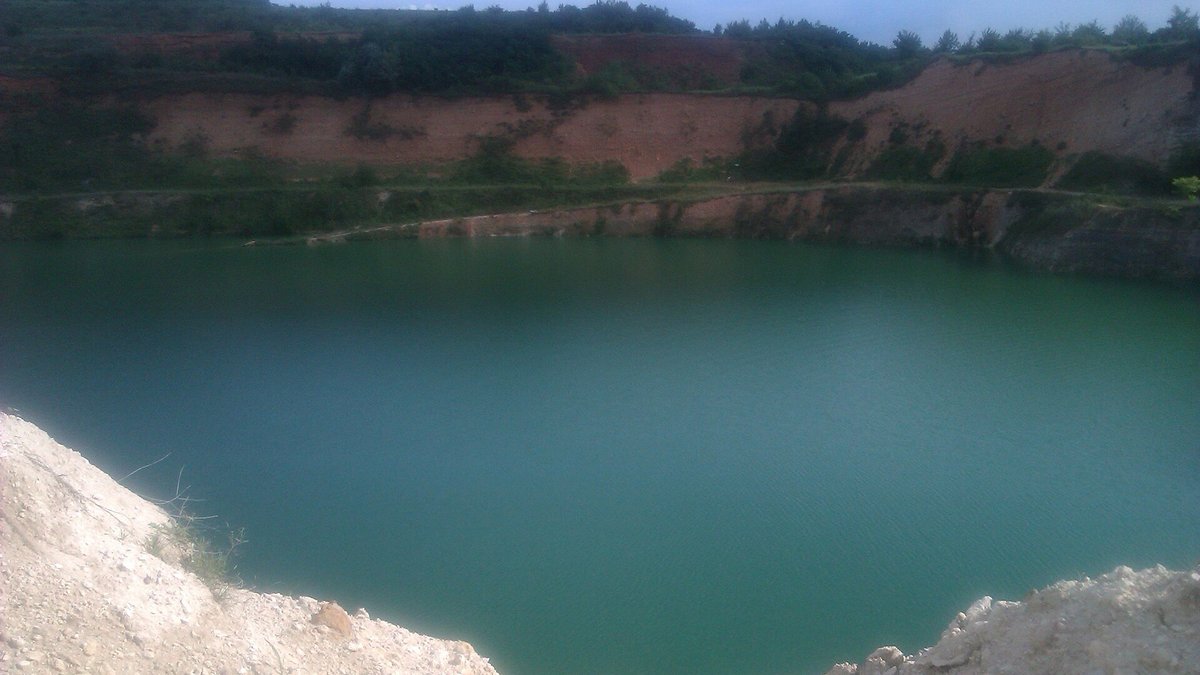
Our Indonesia 300 t/h basalt project pairs a PEV1000 jaw crusher with an HP300 multi-cylinder cone crusher and a VSI900 sand maker, producing 0-5, 5-10, 10-20 and 20-31.5 mm cubic aggregate from basalt at Mohs 6-7. Hard, abrasive rock went to the multi-cylinder machine — the choice the material made, not the supplier.
Q: Which produces better particle shape?
A: Both crush by lamination, so both produce good cubical shape. In hard, abrasive rock at high reduction, the multi-cylinder machine is the more common choice.
Q: Is single-cylinder simpler to maintain?
A: Yes, generally. It has fewer hydraulic components and a simpler circuit, which means fewer service points.
Q: Can a single-cylinder crusher handle hard rock?
A: It can, but for hard, abrasive rock at heavy duty, the multi-cylinder machine is the more common and often the more economical choice.
Q: Does the type affect the price much?
A: Price follows size and build. The right question is which type suits your material and duty — then the model, then the price.
Q: How do I know which one my project needs?
A: Send your material and hardness, maximum feed size, required product sizes and target capacity. We will recommend the type, the model and the cavity.
If you want this same comparison boiled down to a checklist — what to write down before you call any supplier — read our companion piece, Single-Cylinder vs Multi-Cylinder Cone Crusher: 6 Ways. This article is the “why” (how the two machines are built differently); that one is the “what” (which box to tick). The two are meant to be read together, and both link back here.
Send us your material, feed size, product spec and capacity. Our engineers will tell you plainly which machine type fits your duty — and why — usually within 24 hours. For the five-factor shortlist before you talk to any supplier, see our guide on how to choose a cone crusher.
Email : info@aonmining.com
WhatsApp : +86 166 3833 7976
Website : www.aonmining.com
AON Mining Equipment Co., Ltd. — Zhengzhou, China
19 years in aggregate and mining equipment, 300+ EPC projects delivered.